An open door: the men’s group that’s making a difference
At the Moreton ATSICHS Men’s Group, Aboriginal and Torres Strait Islander men can connect to culture and Community.

“There can be stereotypes and stigmas attached to being an Aboriginal and Torres Strait Islander man. The service we provide is a place where men can get support on a regular basis – a regular, frequent and predictable open door each fortnight.”
Moreton ATSICHS Family and Wellbeing Service Men’s Group
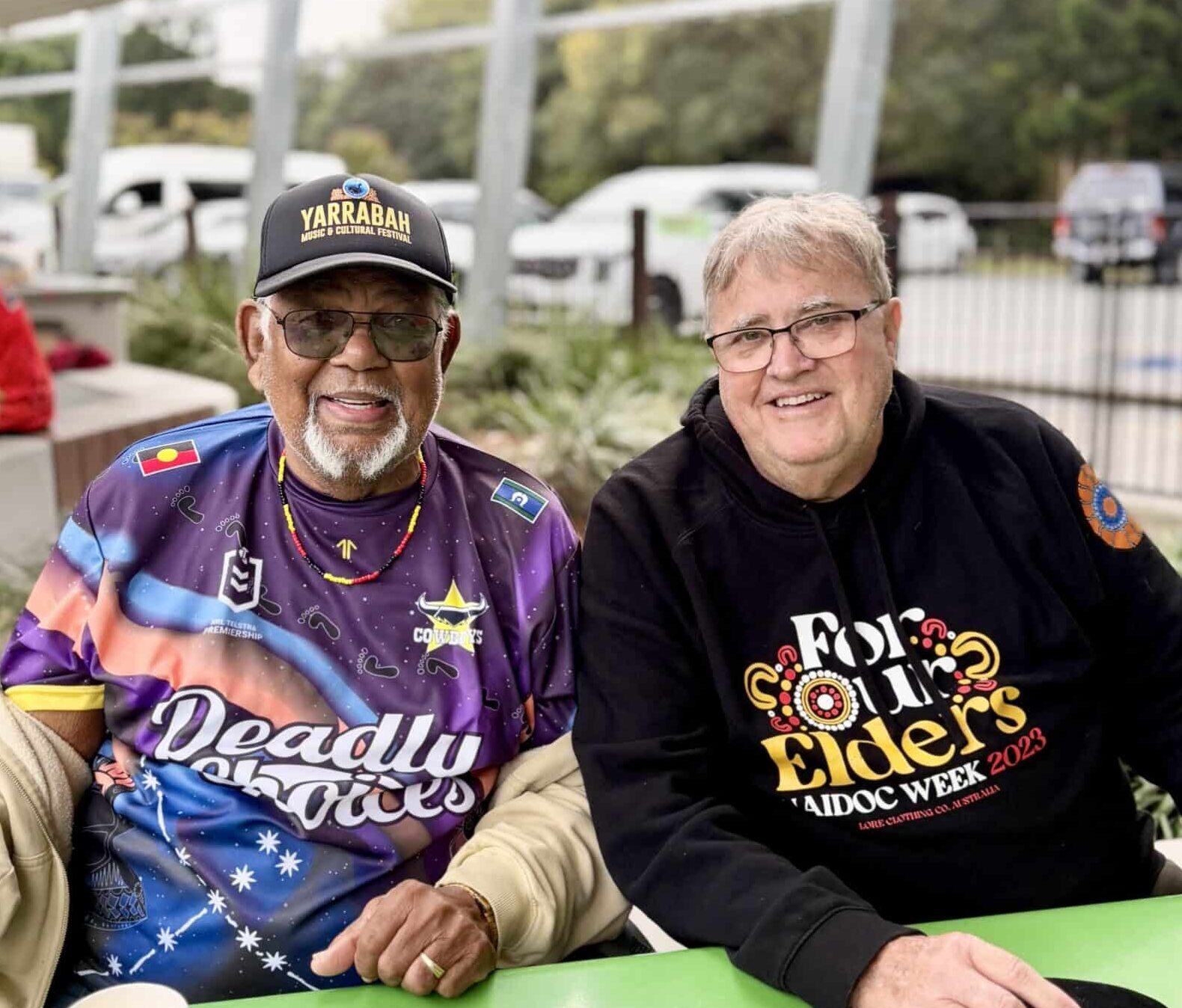
On an unseasonably rainy day in June, a group of men gather at a park in Strathpine. With the BBQ fired up, the men come together for music, yarning and connection.
Taking place fortnightly in locations across the Moreton Bay region, the group offers a regular chance for men to meet in a pressure-free, culturally safe setting. Moreover, it’s a space where all are welcome. Attendees are able to connect to culture and Mob.
“It’s so important to have safe spaces to feel heard,” says Moreton ATSICHS’ Family Practitioner, Julian Hunt. “There can be stereotypes and stigmas attached to being an Aboriginal and Torres Strait Islander man. The service we provide is a place where men can get support on a regular basis – a frequent and predictable open door each fortnight that a man can walk through. And if they just want to have a coffee and a sit in the corner, that’s fine too.”
A safe space outside the home
Founded in 2024, the Moreton ATSICHS Men’s Group has been well-received. Word of mouth and regular feedback ensure the group’s continual growth and that members’ needs are well met. For group member Terry Stubbings, it offers an invaluable chance for men to open up outside of the home.
“There can be lot of mental health issues in Indigenous men, and it’s just knowing there’s support there if you need it,” says Terry. “We’re all here to help, have a chat and just be with other Indigenous men. I think we get left out of a lot of things. And of course, men don’t help themselves – we don’t want to talk about what’s going on in our lives. It helps to have a chat with somebody outside the family circle.”
Another attendee, Michael Karam, has attended for over six months and says it’s a great chance to connect with Mob.
“I like to get out of the house because I can’t work anymore, because of my disability and my mental health,” he says. “I love getting out and meeting new people… and I can talk to the guys about anything.”
Recognising the past
To actively create a culturally safe space, Moreton ATSICHS Men’s Group is shaped by a trauma-informed lens acknowledging the past. The group is supported by Moreton ATSICHS counsellors and Community Liaison Officers who regularly attend.
“Understanding our journey is crucial,” says Julian Hunt. “What happened yesterday isn’t left there – it actually impacts on our people today. People are yearning for connection. They want to be connected to Mob, and understand where they come from and their journey. Some people don’t understand the issues that have occurred in the past and how that impacts their family today.”
For group members to access community and support, team members from local satellite health centres run regular men’s groups. This ensures there’s a weekly option for connection.
“It can be a great way to break up the week”, says Chris Ewin, from Bribie Island Satellite Health Centre. “If there’s a bit of family stuff going on, or if there’s personal stuff going on, coming to a group like this helps to break that cycle a bit. And we have a lot of different services here as well – so if you do need a specific support you can ask.”
Supporting the future
Team members from the satellite health centres regularly attend the Moreton ATSICHS men’s group to provide additional support and engagement. For Joey Ellison, from Kallangur Satellite Health Centre, some of the most meaningful times at the groups happen when the members feel truly safe and supported.
“When you have a room full of fellas laughing, or a room where everyone allowed someone to share – they might be emotional, might have their head down and be shedding a tear. That’s the most rewarding thing in the world to me – that there’s a strong black man standing in front of me, sharing this vulnerable moment with all of us.”
As the group grows, the men who attend continue to shape it. For Julian Hunt, it’s crucial to maintain the group’s momentum and to continually support Aboriginal and Torres Strait Islander men.
“It’s taken some time to build this to where it is now, and we don’t want to be a flash in the pan,” he says. “It’s been great seeing people having conversations in a safe space. We want to keep having that door open for anyone who needs it.”
Never miss out!
Subscribe to our newsletter to stay up to date with the latest events and news from our team.