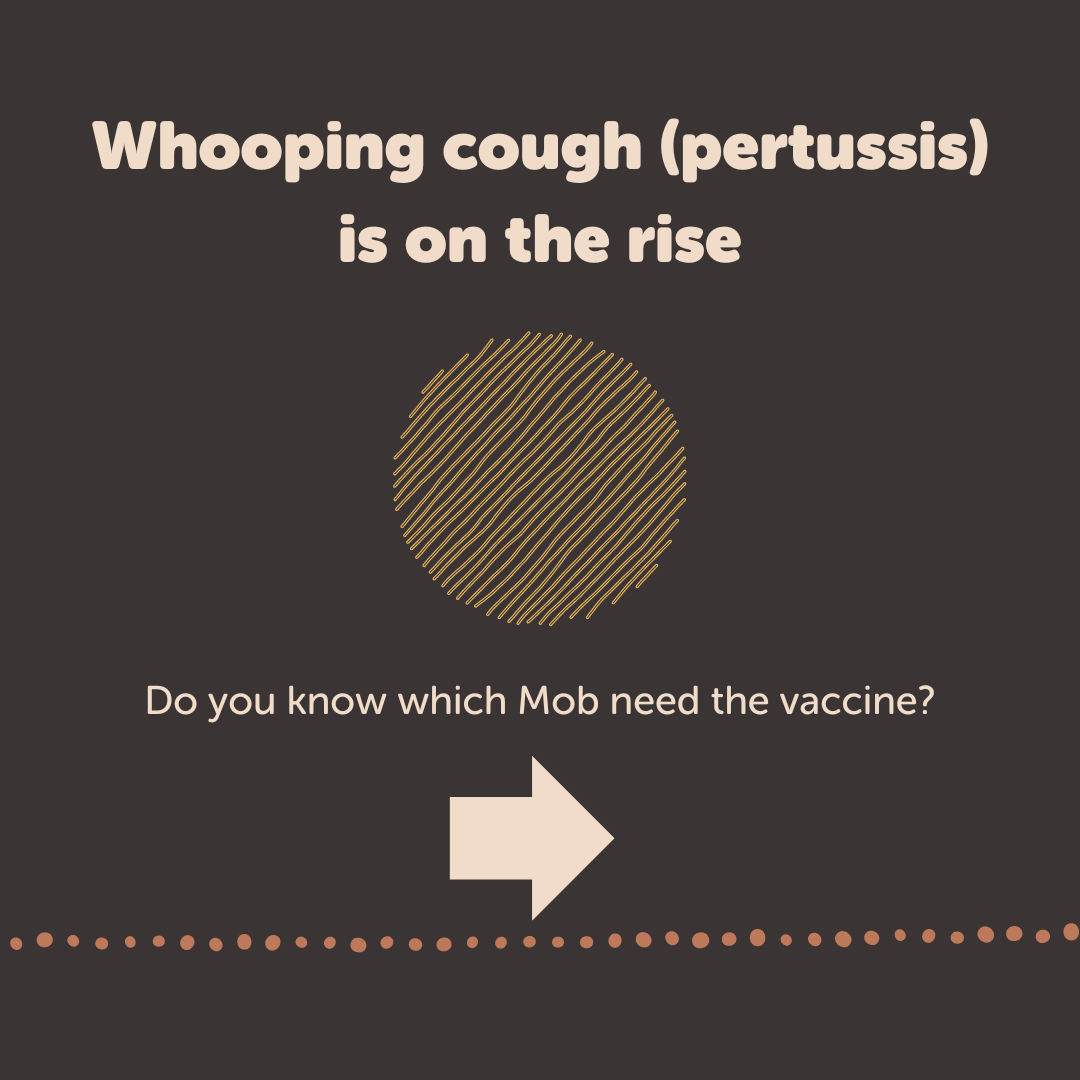
Whooping cough is on the rise
Queensland is currently experiencing a large spike in whooping cough cases. Pregnant women and bubs are most at risk.
How serious is it?
IUIH’s Public Health Manager Rochelle Robinson said whooping cough (or pertussis) is particularly serious for bubs under six months old.
“Whooping cough is a highly contagious and very serious illness in bubs and can lead to hospitalisations and even deaths.”
“The good news is that it can be prevented. That’s why it’s really important for pregnant women to get the vaccine – this action will reduce the risk of a bub being hospitalised with whooping cough by around 90 per cent,” Ms Robinson said.
Immunisation is key
Immunisation between weeks 20 and 32 of every pregnancy offers crucial protection in the critical early months of life before babies can be vaccinated themselves, and is provided free under the national immunisation program.
The whooping cough vaccine is also available for free for bubs aged 2, 4, 6, and 18 months, and 4 years old, and for kids aged 11-13 years as part of the free Queensland School Immunisation Program.
Anyone under 20 who missed a childhood whooping cough vaccine can also access one for free.
People over 18 who haven’t had the vaccine in the last 10 years should get a booster. This will protect others, including vulnerable bubs and pregnant mums from getting whooping cough.
Cases so far
Whooping cough is a cyclical disease which peaks every three to five years. During the last peak in 2019, there were 1,126 cases of whooping cough reported in Queensland between 1 January and 8 September. To compare, in 2024, there have been 8,440 cases in the same period in Queensland.
Never miss out!
Subscribe to our newsletter to stay up to date with the latest events and news from our team.